
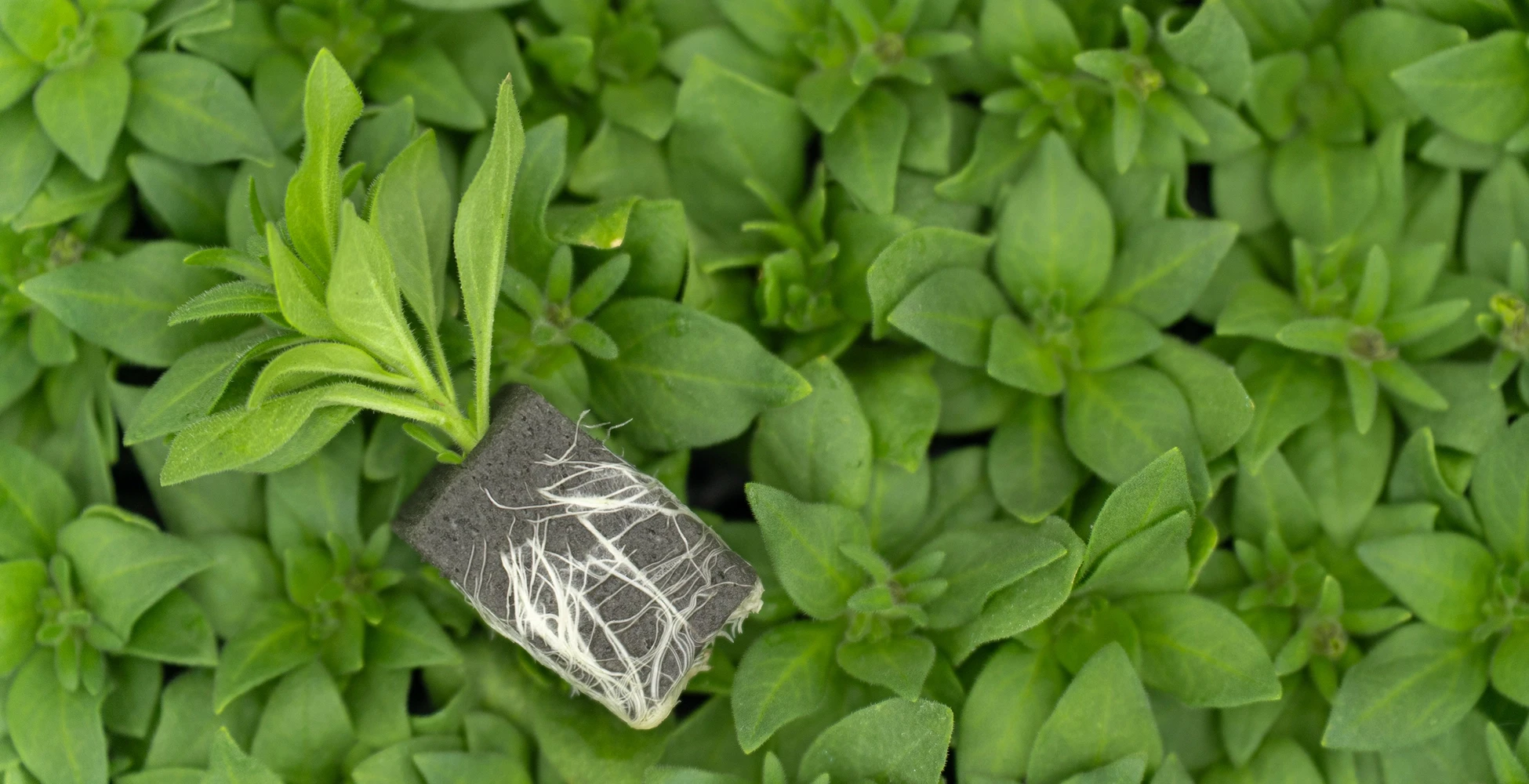

From new innovations to time-tested products, a well-designed on-site trial is the one sure way to learn whether a substrate can eliminate your pain points or improve your operational efficiency and meet your propagation goals.
Whether you’re trialing one of our OASIS® substrate innovations or a competitor’s product, these five simple, but essential, points can help you generate meaningful data and make a confident decision about what substrates suit your growing operation best.

1. Run a real trial.
A meaningful trial that provides accurate, useful results involves more than putting trays on the bench and checking their progress whenever you think of it. That’s not a trial. That’s a drain on bench space, your cutting investment, and the potential gains an improved substrate might bring. Ensure you get the results you need by focusing on trial precision and consistency.
By our definition, a trial is a methodical evaluation of a product’s properties and performance. Start your trial with a precise plan for what, why, when and how you’ll monitor, measure and record the data you collect. Follow that plan methodically and consistently.
2. Control the variables.
Whatever substrate(s) you’re trialing, establish a control group with your existing substrate and SOPs, then establish your trial group(s) with those same parameters. Eliminate as many variables as possible, so you can get a true picture of how your trial substrates perform.
Unless you ensure your trial group has the same cutting sources, same sticking methods and same environmental conditions, you aren’t comparing substrates. You’re comparing production treatments. It’s not hard to introduce variables accidentally. So be diligent and establish strong controls to keep your trial on track.
Most growers run trials early season or late season, when they’re able to devote more time to them. That’s a good idea, but you’re often dealing with poor cutting quality or abnormal environmental conditions at those times, so pay close attention.
3. Define what success looks like for you.
Don’t just start collecting data without an end in mind. Decide upfront what results would be worth a substrate change. A product that improves rooting but creates other production headaches isn’t necessarily an improvement. Know upfront what metrics matter most to you and always keep the big picture in mind.
Crop performance factors like strike and survival rates, days to visible rooting and days to transplant matter. Production impact and profitability matter, too. Don’t overlook irrigation, inputs, pest and pathogen pressures — even product sourcing and availability. Substrates that cost more per tray can still boost profitability when they save labor, shorten bench times or improve quality overall.
4. Don’t limit success to your current regimen.
Evaluate products fairly and give new substrates a chance to really show what they can do. Limiting your trial substrate(s) to your existing regimen isn’t necessarily a fair comparison. It may be a controlled comparison, but that doesn’t translate to a test of a trial product’s full potential.
Talk with your supplier. Learn what the substrate requires for peak performance. Follow their recommendations. Give the product the conditions it needs for optimal performance, before you judge its worth.
That doesn’t mean changing the rules to make a trial product look good. It means evaluating it under appropriate conditions so you can determine whether those conditions are practical for your operation — and whether the results justify making a change.
5. Understand intentional differences.
Every substrate is different. You need to understand those differences to properly interpret your trial results. When two substrates don’t perform the same, it doesn’t mean one is better or one’s worse. Product differences may be intentional — designed to suit particular crop, climate or growing system needs.
Peat-based products may have different starter charges or blends — for a reason. Different wraps in stabilized substrates may be designed for specific needs. Inert engineered foam products may target maximum nutrient flexibility, while air-to-water ratios and water-holding capacity are tailored to certain crops or production conditions. Foam substrates ship dry, so they require an initial presoak. That may seem inconvenient, but they’re easier to ship and store — and you don’t pay to ship water.
When you run a trial that matters, you’ll finish with more than impressions. You’ll have meaningful performance and production data you can trust. Then you can make a confident, informed decision regarding your growing operation and which substrate can benefit you most.
Interested in trialing one of our OASIS® substrates or other products?
Your Oasis Grower Solutions Territory Sales Manager can help you design and run a meaningful trial — and make the switch when it’s done. Contact an Oasis Grower Solutions Territory Sales Manager today or reach out to our inhouse team at +1 (855) 585-4769 or [email protected].
We’re Oasis Grower Solutions. Lean into us. Let our people and our products help you excel.
A Grower’s Perspective